In the traditional world of digital commerce, the goal is all about persuasion. Merchants invest in beautiful UI, clever copy, and personalized recommendations to nudge a customer towards a ‘Buy’ button that he or she would hopefully click to complete a purchase.
Throughout this whole journey, a promise to the customer is being created, based on statements that might appear during the course of the interaction, statements such as ‘in stock,’ ‘arrives by Friday,’ ‘free returns,’ ‘pick up in two hours,’ and the like.
Customers can interpret these statements probabilistically and with some discretion. They may still buy, but with a mental discount applied to the level of certainty. Or, alternatively, this flexibility might be used the other way around: A retailer may opt to be more conservative in the statements about the promise being made, to ensure that, in the event of an even better scenario, a customer is delighted rather than disappointed.
AI agents do not do ‘discretion’
This, however, is changing. As we move into the era of agentic commerce, the battleground shifts from persuasion to proof. When an AI agent selects a product, it isn’t reading marketing or website copy – it is evaluating structured operational signals.
Why 'Estimates' are the Enemy of Growth
In agent-driven journeys, a ‘promise’ (the combination, for example, of availability, delivery date, and fulfillment options) is a decision input. If that input is unreliable, the entire transaction collapses.
Promise integrity is the discipline of aligning what has been offered with what can actually be executed across a complex fulfillment network. Here is why this matters more than ever in 2026:
- Automation Increases the Cost of Error: In traditional ecommerce, an inaccurate promise leads to a frustrated customer and potentially a support ticket. In agentic commerce, bad signals drive autonomous commitments at scale that must then be manually unwound through refunds, substitutions, and expensive trust repair.
- The Rise of Algorithmic Trust: Agents learn. As they interact with various merchants, reliability becomes a visible performance signal. Merchants that consistently fail to meet commitments risk ‘algorithmic exclusion’ – in other words, being selected less often, not because their products are inferior, but because their systems are untrustworthy.
The Differentiator: Feasibility over Optimism
Winning retailers will be those that balance ambition with feasibility. It is better to promise a guaranteed three-day delivery rather than a ‘maybe’ next-day delivery that an agent cannot verify.
| Traditional Commerce | Agentic Commerce | |
|---|---|---|
| Primary Goal | Persuasion & Navigation | Intent & Execution |
| Decision Maker | Human (High discretion) | AI Agent (Zero ambiguity) |
| Success Metric | Conversion Rate | Promise Accuracy Rate |
The OMS as a Strategic Trust Engine
To survive this shift, the Order Management System (OMS) must be used as a strategic trust engine.
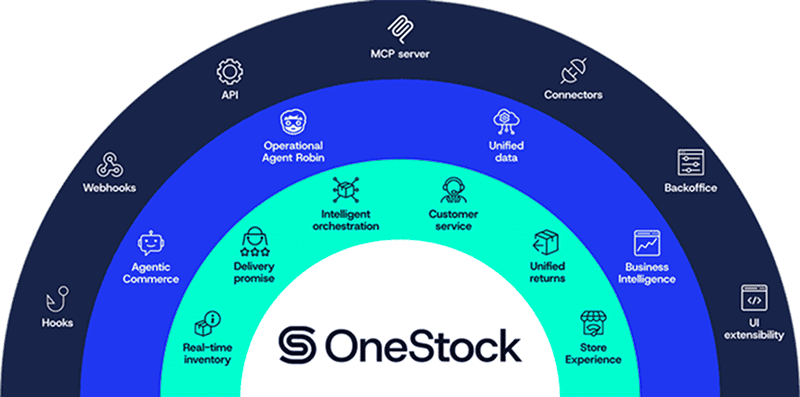
It is the role of Distributed Order Management (DOM) to protect the promise by providing real-time inventory visibility, calculating credible delivery windows based on actual carrier capacity; and then orchestrating fulfillment so that reality matches the commitment.
“AI only creates value when it enables real business outcomes... An OMS that serves as the system of truth for inventory availability, customer promise, and order execution becomes the foundation for delivering truly intelligent, agentic commerce.”
Klarissa Marenitch, Retail CTO, Cognizant
Is Your Commitment Worth Its Weight in Data?
In a world where connection is becoming a commodity, reliability is your only true differentiator. Retailers must audit their promise integrity now – and before agentic channels scale – to ensure they aren’t just industrializing operational weaknesses.