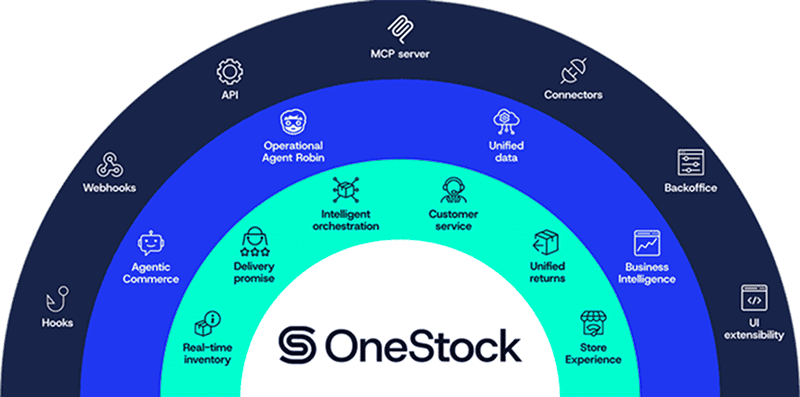
Real-time Inventory
Your single source of inventory truth
A unified and centralized view of all your inventory in all locations and sales channels. Increase online availability by up to 30%, eliminate stockouts and maintain full control of how inventory is exposed across sales channels, markets and fulfillment scenarios, all from a single, reliable source of truth.

Make every item available to every customer, wherever they shop
Real-time aggregated availability
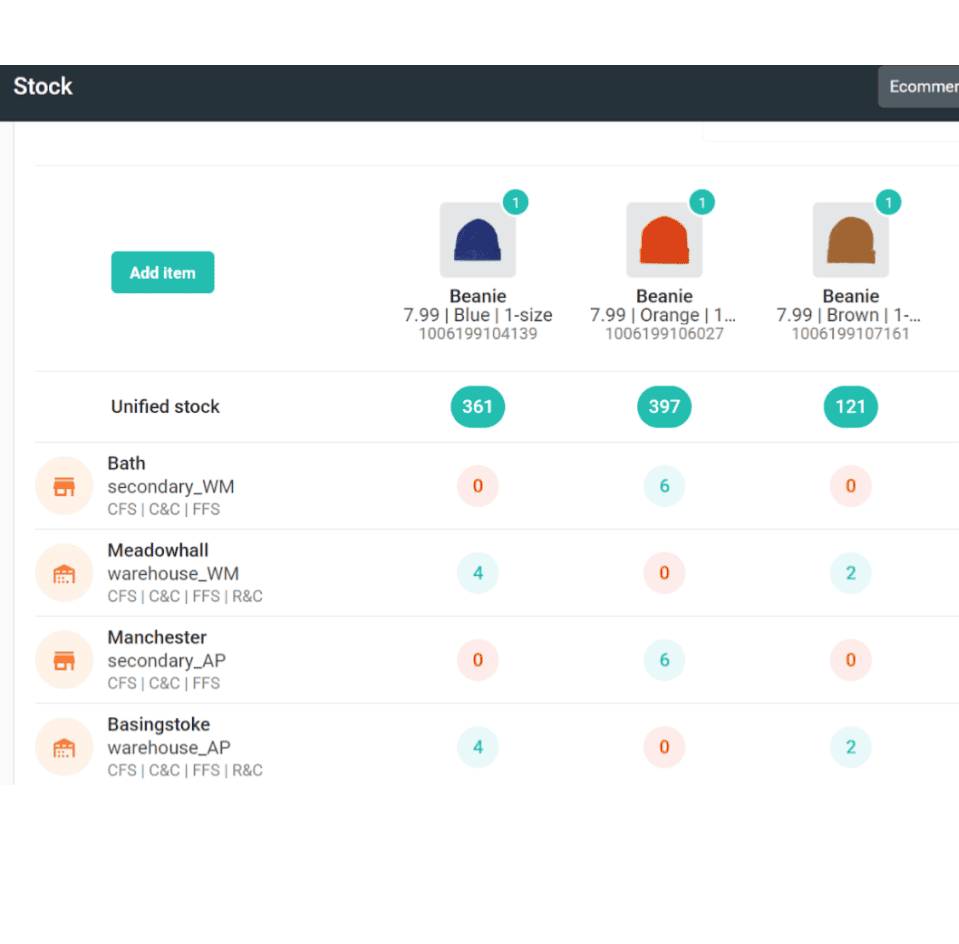
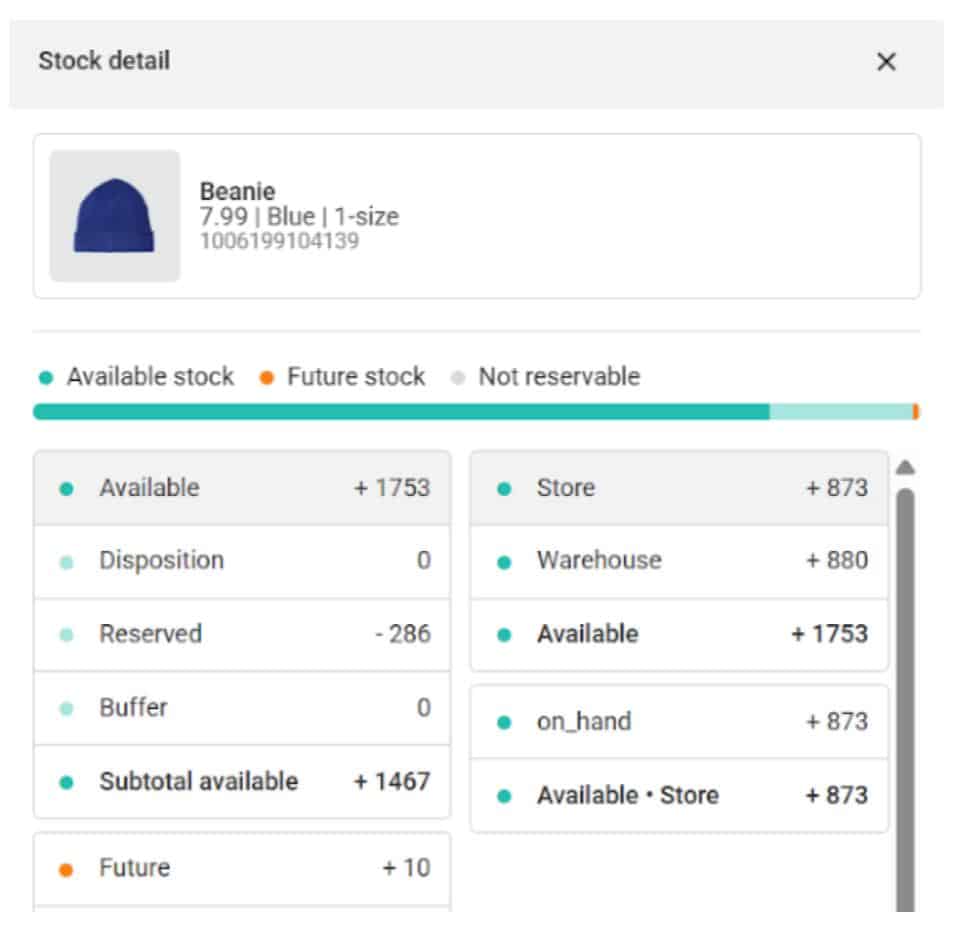
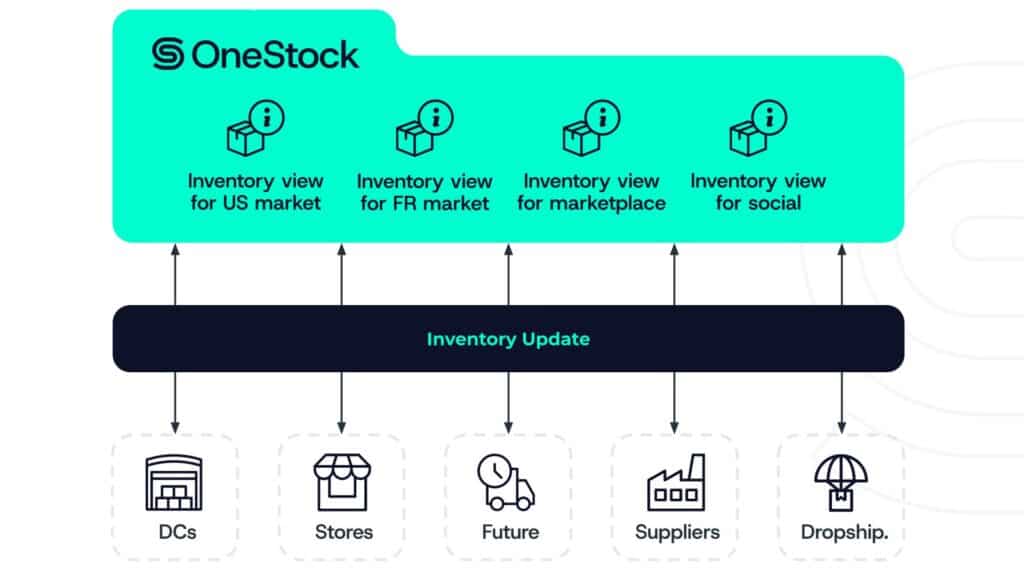
Aggregate inventory from stores, DCs and suppliers into one real-time view. Calculate sellable stock by combining on-hand and future quantities while subtracting reserved, disposition (defective), and buffer stock so that every channel sees the same true availability.
Manage availability by channel
Segment inventory by channel, market or purpose to control distribution and protect strategic stock pools. Expose the right products and quantities to each of your channels, whether ecommerce, physical stores, marketplaces or wholesale while AI-enabled order orchestration rules ensure each order pulls from the best location.
Sell ahead with future inventory
With OneStock you can expose future and in-transit inventory to customers within defined horizons. Enable pre-orders, improve delivery promise accuracy and capture sales earlier in the season by combining on-hand stock with incoming inventory, all while maintaining full control.
Keep control during peak
OneStock customers process millions of inventory updates daily with enterprise-grade reliability. For example, JD Sports handles 1,400 promise calls per second with response times under 250ms, ensuring accurate availability across all channels, even during peak trading periods and product launches.







Inventory management for commerce
Multi-channel commerce demands speed, accuracy and flexibility in inventory management. Unlike ERP and WMS-based systems, OneStock is designed specifically for commerce businesses, giving you the control you need.
Channel-specific inventory distribution
OneStock enables business users to fully configure inventory views by channel, market or use case. Inventory views combine on-hand and future stock and take account of reserved, disposition and buffer (safety) stock. Dynamic bundle stock calculations (splittable vs non-splittable) and reservation rules can be applied easily.
Maximize sales with future inventory
OneStock allows retailers to make use of future inventory in an intelligent way, enabling pre-orders and early selling while maintaining accurate delivery promises. The system manages reservations against future inventory quantities, calculates delivery dates based on expected receipt dates and applies prioritization rules to determine which orders are fulfilled first.
Segment inventory for strategic control
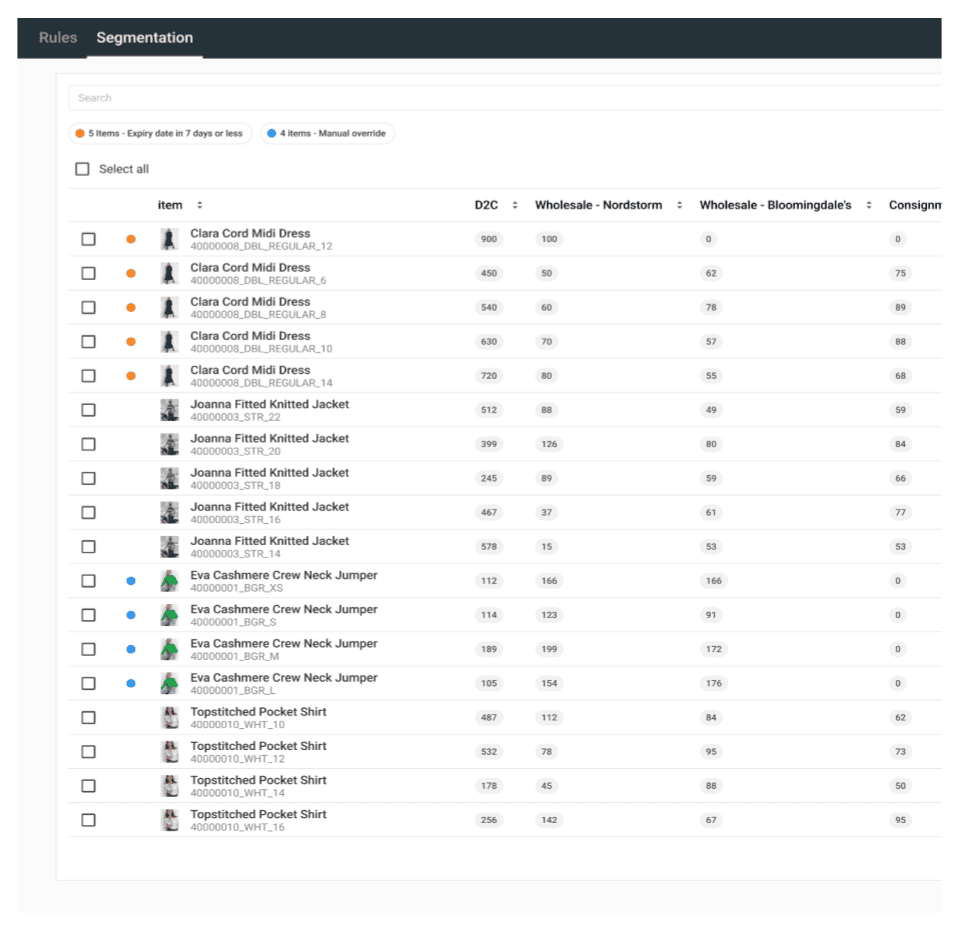
OneStock’s virtual stock rooming divides physical inventory into channel-specific segments. Protect strategic stock pools for VIP customers or direct channels, set safety buffers to prevent overselling on fast-movers, and control exactly which inventory is exposed to e-commerce, marketplaces, B2B portals, or wholesale partners—all without moving a single item.
Architected for scale
At its core, OneStock’s unified inventory is powered by a real-time engine designed to handle very high volumes of simultaneous requests with maximum availability. The system processes millions of inventory updates per day while maintaining accuracy across highly dynamic stock scenarios, instantly reflecting reservation changes and synchronizing availability as inventory moves between locations.
Scale and flexibility
Maximize online availability with store inventory
Unifying warehouse and store inventory can have an almost immediate and significant impact on multi-channel businesses. For example, children's apparel retailer Petit Bateau expanded its catalog by 20% and increased add-to-basket rates by 20%, capturing sales that would have been lost to stockouts and improving customer service.
Scale marketplace channels with controlled stock
OneStock acts as a central inventory hub for marketplace expansion, enabling retailers to expose inventory to marketplaces. For example, specialist retailer Idkids created marketplace-specific unified inventory views with OneStock to ensure a smooth and controlled rollout without disrupting existing channels.
Optimize cross-border with store networks
Fashion brand Jacadi leverages store inventory for certain markets in order to mimimize customs delays and optimize margin based on varying tariffs and import duties. By creating market-specific inventory views for US, UK and EU markets, brands fulfill orders using local store stock, reducing delivery times and eliminating cross-border complications.
Segment inventory for B2B and wholesale
Manufacturers and distributors segment inventory by customer type, sales channel, and geography. Protect strategic B2B allocations from retail channel depletion, offer branch-level availability for pickup and maintain differentiated stock visibility rules across direct, wholesale, and marketplace channels.
Managing real-time inventory in OneStock
Aggregate inventory sources
OneStock consolidates inventory from all locations, including warehouses, DCs, stores, suppliers and dropship partners into a unified and real-time pool using APIs, batch imports and event-driven updates.
Define inventory views
Channel-specific inventory views are configured based on your particular business rules, determining which inventory is visible to each of your channels such as ecommerce, marketplaces, B2B portals and social channels.
Real-time availability calculation
The real-time engine processes stock queries from any channel instantly, calculating available-to-sell by combining on-hand, future and safety stock as well as reserved quantities across all sources.
Expose to all channels
Inventory availability is exposed to all relevant channels automatically through the required integration method, e.g. Stock API, Promise API, batch feeds or MCP for agentic commerce. This ensures consistent visibility across all your digital channel, including AI-driven shopping experiences.
Continuous synchronization
As orders are placed and inventory moves, the system updates reservations and availability in real time, preventing overselling and maintaining accuracy even during high volume peak demand periods.
How does OneStock handle inventory information from multiple different systems and sources, such as warehouses, stores, and suppliers?
OneStock first gathers inventory data from all sources and locations using any required integration method and combines into a single, unified view. You can then define custom inventory views to control which stock is visible and usable for specific channels, markets or use cases.
Can I segment inventory differently for each sales channel?
Absolutely. OneStock excels at inventory segmentation by channel, allowing you to allocate specific inventory levels to ecommerce, marketplaces, B2B portals or social commerce, for example. This ensures strategic inventory pools are protected while maximizing overall sell-through.
What does ‘real-time’ mean for inventory visibility?
Real-time means inventory availability is updated continuously as orders are placed, stock moves between locations or new inventory arrives. OneStock processes more than 15 million stock updates daily and handles thousands of concurrent availability requests with sub-250ms response times, ensuring accuracy across all touchpoints. This is critical for many retail businesses as out-of-date inventory data directly contributes to lost sales, cancellations or over-selling.
Can I use future or in-transit inventory for pre-orders?
Definitely. OneStock allows you to expose future inventory within defined horizons, enabling pre-orders and early selling. The system calculates the delivery promise based on expected receipt dates and manages reservations against inbound stock while maintaining operational control.
How does real-time inventory visibility support marketplace expansion?
OneStock acts as a central inventory hub, allowing you to create marketplace-specific inventory views for platforms such as Saks Firth Avenue, Wayfair, Amazon, Zalando or Galeries Lafayette. You control which inventory is exposed, manage reservations centrally and prevent overselling, all while scaling to new marketplaces without changing internal processes.
Take control of your inventory, wherever it is in your network.
By business model
By Scenario









Learn how retailers increase availability, streamline fulfilment and grow with OneStock.