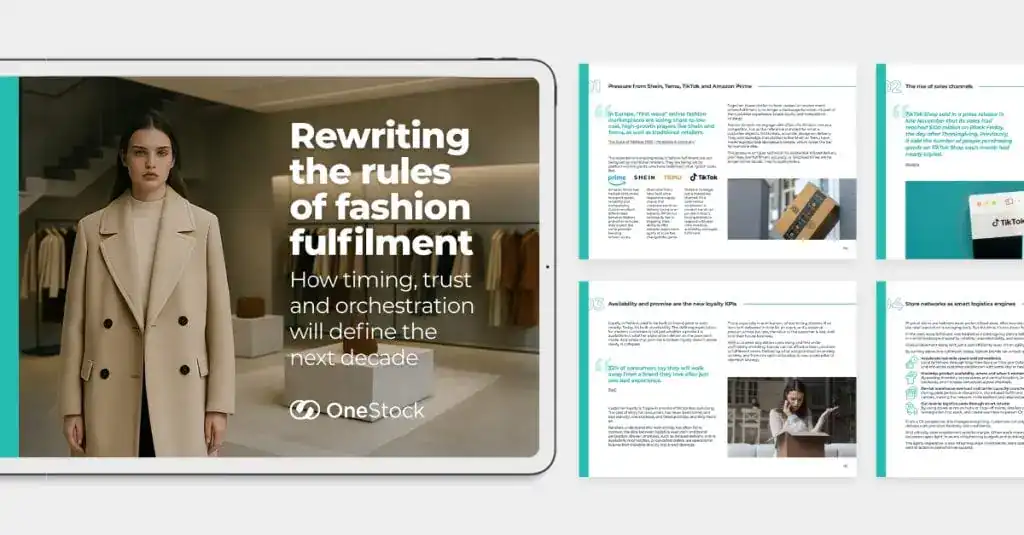
For years, fashion was defined by creativity, identity and brand storytelling.
But today, when trends are born overnight and expectations are shaped by platforms, not runways, a new force has taken centre stage: fulfilment.
Operational excellence has become the new battleground. Consumers no longer separate the product they want from the experience of receiving it. A missed delivery, a broken promise, or a delayed arrival is a brand failure.
The most forward-thinking fashion brands have recognised this shift. They’re not just asking, “How do we keep up with demand?”. They’re asking “How do we keep every promise across every channel, every touchpoint, every region — while protecting margin and controlling costs?”
Because that’s the paradox. Fulfilment is now a strategic lever for differentiation, loyalty and growth — but it must deliver all of that without eroding profitability.
This whitepaper is our answer to that tension. It draws from the expertise of leading retailers, OneStock’s frontline experience with some of the world’s most ambitious fashion brands, and the macro trends reshaping global commerce.
What emerges is a new blueprint for retail: one where fulfilment is the heartbeat of the brand.
The next era of fashion is operational
In a world where trends go viral in minutes and consumer expectations evolve at the speed of a scroll, the fashion industry is undergoing a profound transformation. The old rules — built on branding, aesthetics, and seasonal drops — are being rewritten by a new logic of fulfilment, agility, and operational sophistication.
A shift from aesthetics to logistics
From 2022 onward, our fashion customers and prospects have consistently reframed their strategic objectives. Where growth once meant expanding product lines or investing in digital campaigns, today it means protecting margins, minimising waste, and executing reliably across channels.
This shift isn’t theoretical. It’s playing out in boardrooms and tech evaluations across the globe. Today’s fashion leaders don’t only ask, “How do we make our brand more desirable?” They also ask, “How do we make our promise deliverable — on time, at scale, and without waste?”
This new chapter in fashion is shaped by three converging forces: a move from aesthetics to logistics, a rising tide of pressure from platform-native giants, and the growing expectation that fulfilment must serve not only convenience, but also sustainability and circularity while optimizing profitability.
Creativity still defines a fashion brand’s identity. But increasingly, operational precision defines its credibility.
1 – Pressure from Shein, Temu, TikTok and Amazon Prime
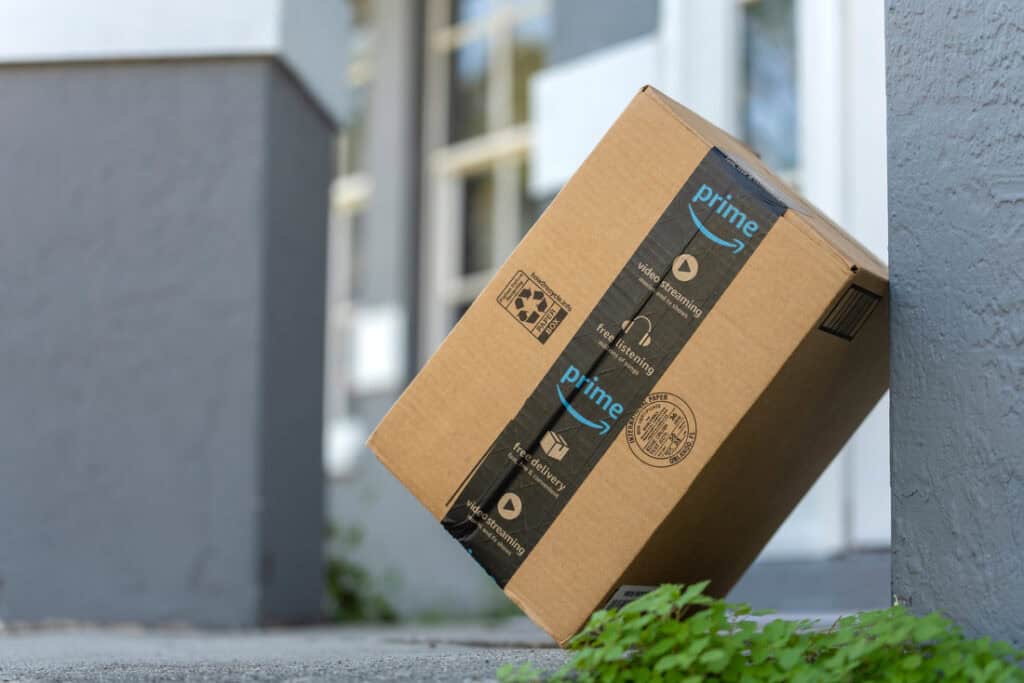
Together, these platforms have created an environment where fulfilment is no longer a backstage function. It’s part of the customer experience, brand equity and competitive strategy.
In Europe, “first wave” online fashion marketplaces are losing share to low-cost, high-growth players like Shein and Temu, as well as traditional retailers.— The State of Fashion 2025, McKinsey & Company
This pressure isn’t just technical. It’s existential. Missed delivery promises, low fulfilment accuracy, or long lead times are no longer minor issues. They’re loyalty killers.
| Amazon Prime | Shein and Temu | TikTok |
|---|---|---|
| Has trained consumers to expect speed, reliability and transparency. | Have built ultra-responsive supply chains that compress trend-to-delivery cycles to an extreme. Their ability to offer extreme assortment agility at scale has changed the game. | Is no longer just a marketing channel — it’s a commercial accelerator. A product trend can go viral in hours, forcing brands to respond with real-time inventory availability and rapid fulfilment. |
2 – The rise of sales channels
Fashion now runs on algorithms, not seasons. Platforms like TikTok, Instagram, and emerging creator marketplaces have become fashion’s new launchpads. A single video can ignite demand at a velocity that bypasses traditional go-to-market processes. Microtrends are no longer curiosities — they are commercial imperatives, each one creating a flashpoint of opportunity and risk.
This real-time, trend-driven ecosystem introduces a paradox: fashion demand is both more abundant and more unstable than ever before. Brands can’t rely on rigid launch calendars or over-forecasted volumes. They need to respond in the moment: allocating inventory intelligently, promising delivery precisely, and ensuring execution without friction.
3 – Availability and promise are the new loyalty KPIs

Loyalty in fashion used to be built on brand, price or even novelty. Today, it’s built on reliability. The defining expectation for modern customers is not just whether a product is available — but whether a brand can deliver on the promise it made. And when that promise is broken, loyalty doesn’t erode slowly. It collapses.
This is especially true in fashion, where timing matters. If an item isn’t delivered in time for an event, or if a seasonal product arrives too late, the value to the customer is lost. And so is their future business.
32% of consumers say they will walk away from a brand they love after just one bad experience.— PwC
Customer loyalty is fragile in a world of frictionless switching. The cost of entry for consumers has never been lower: one bad delivery, one stockout, one failed promise, and they move on.
4 – Store networks as smart logistics engines
Physical stores are fashion’s most underutilised asset. After two decades of ecommerce dominance and operational centralisation, the retail pendulum is swinging back. But this time, it’s not about footfall — it’s about fulfilment.
By turning stores into fulfilment nodes, fashion brands can unlock a powerful set of operational and commercial advantages:
- Accelerate last-mile speed and convenience — Local fulfilment through Ship from Store or Click and Collect dramatically shortens delivery times, reduces last-mile costs, and enhances customer satisfaction.
- Maximise product availability — By pooling inventory across stores and central locations, brands can resolve size and variant mismatches, reduce stockouts, and increase conversion.
- De-risk warehouse overload — During peak periods, store-based fulfilment absorbs pressure from DCs and diversifies reliance on national carriers.
- Cut reverse logistics costs — By using stores as return hubs, retailers can reduce return shipping costs, accelerate resale or reintegration into stock.
And critically, store enablement unlocks margin. When stock moves from shelf to parcel without touching a warehouse, fulfilment becomes capex-light.
5 – Logistics logic under pressure: rethinking fulfilment to defend margins
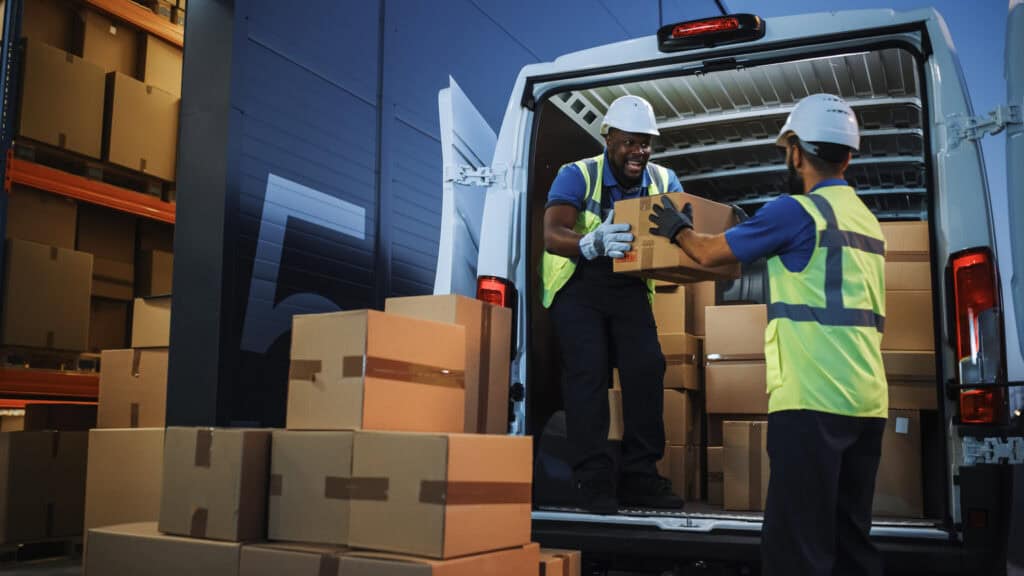
Margins in fashion retail are under attack. Transport costs are volatile, tariffs are rising, and fulfilment has become one of the largest line items dragging on profitability. The brands that stay ahead won’t just optimise logistics — they’ll orchestrate smarter:
- Use stores to bypass tariffs — Brands are turning stores into local fulfilment nodes to avoid duties and shorten delivery times.
- Rethink carrier allocation — Based on stock origin, destination, cost, and SLA, retailers are assigning the most efficient carrier in real time.
- Stop avoidable cancellations — DOM rules that validate availability, reroute orders, or surface exceptions early help avoid lost revenue.
- Match fulfilment cost to order value — High-value orders may justify premium services; for low-margin baskets, efficiency is king.
- Activate cost-lowering scenarios — From consolidation to cross-docking: grouping items to avoid multi-package fees, pooling low-demand SKUs, and cross-docking to streamline last-mile operations.
6 – Growing expectations of recommerce, resale and sustainability

Sustainability is no longer a marketing buzzword. It’s becoming embedded in the operational strategies of fashion retailers.
Fashion brands increasingly face pressure to:
- Provide traceability across the product lifecycle
- Support returns orchestration that minimises waste
- Explore resale models as both margin recovery and brand initiative
Retailers are asking:
- “Can we reroute returns to high-probability resale stores?”
- “Can we manage secondhand and new stock in a unified pool?”
- “Can we track and report on the environmental impact of our fulfilment choices?”
DOM is emerging as a strategic enabler of circularity: it determines what happens to a returned item, how inventory is repurposed, and how fulfilment decisions impact CO₂ emissions.
Reframing DOM as the brain
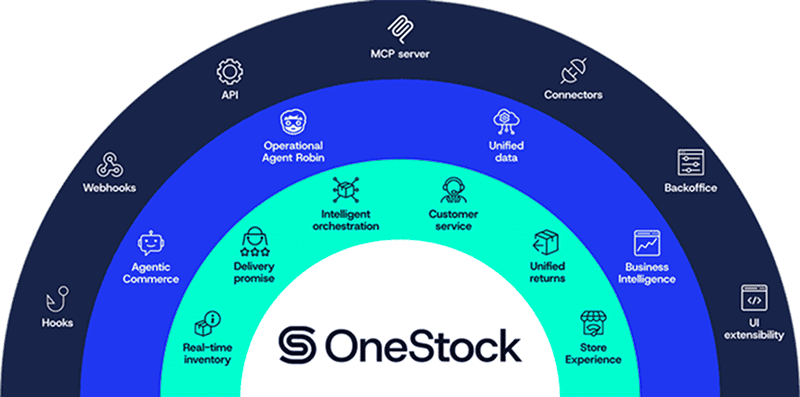
DOM is no longer seen as an execution tool but as the strategic operating system of modern retail. Fashion brands once treated fulfilment as a supply chain concern. Today, they recognise that fulfilment is brand performance.
At OneStock, we see a shift in the language our clients use:
- “OneStock is our operations brain.”
- “It’s where decisions happen, not just data.”
- “It governs how we trade — not just how we ship.”
DOM is now expected to:
- Optimise fulfilment across channels, carriers, and countries in real time
- Execute business logic based on seasonality, profitability, and carbon impact
- Provide decision-makers with actionable dashboards, not just status updates
As trends accelerate, loyalty fragments, and margins narrow, timing becomes brand equity. In this future, DOM is the modern fashion brain: sensing, deciding, delivering — and always learning.
Turning fulfilment into a strategic engine: Why DOM leads the fashion tech stack
| Customer promise engine | Multi unified inventory pools | Unified inventory visibility | Ship from Store |
|---|---|---|---|
| Calculates delivery dates in real time based on actual inventory and carrier performance. | Allowing to dedicate dynamically a stock to every channel. | Consolidates data from warehouses, stores, and third-party stock into a single real-time source of truth. | Orchestration automatically routes online orders to the optimal store based on proximity, workload, and margin logic. |
| Real-time orchestration engine dynamically routes orders to the optimal fulfilment node based on proximity, stock, and SLA. | Channel prioritisation logic can reserve inventory for strategic channels to capture viral demand. | Dynamic promise calculation provides precise delivery dates and pickup options at checkout. | Click and Collect / Reserve and Collect / Returns in store workflows integrate store teams into the omnichannel journey. |
| Store app for fulfilment provides intuitive mobile tools for picking, packing, and confirming orders. | Dynamic inventory allocation rules prevent overselling by updating stock positions across all sales channels instantly. | Intelligent orchestration detects risks early and triggers alternative routing or proactive communication. |
Carrier allocation by zone and cost
Dynamically selects the cheapest and most reliable carrier per route and per order.
Order value–driven fulfilment logic
Aligns shipping choices to margin potential.
Cross-docking and consolidation
Allows holding or grouping orders to minimise parcel counts and last-mile cost.
Tariff aware routing
Automatically prioritises in-country stores to bypass duties and reduce total landed cost.
Intelligent returns routing
Directs products to resale-friendly locations or optimal reintegration points.
Sustainability aware fulfilment rules
Prioritise local fulfilment and consolidated shipping to lower CO₂ emissions.
To conclude

Fashion’s next competitive edge won’t come from new silhouettes — but from new systems. In a landscape shaped by microtrends, margin pressure, and rising consumer scrutiny, fulfilment is the performance layer where customer promises are kept, profits are protected, and loyalty is earned.
The blueprint is clear:
- Unified stock enables the promise
- Flexible orchestration delivers on it
- Activated stores scale it fast and locally
- Promise accuracy earns customer trust
- Composable tech ensures you evolve