With input from our partners:




Introduction:
The Urgency of Sustainability in Retail

The retail industry plays a crucial role in the global economy.
From production to point of sale, retail has created jobs, increased incomes and raised living standards. Innovations in global supply chains have made it possible for goods to move around the world more quickly to meet the wants and needs of growing populations.
In 2025, total retail sales are expected to reach £24.85 trillion (€29.96tn | $31.69T).1
But economic growth has come at a significant cost to the environment. Mass production and consumption have contributed to greenhouse gas emissions, deforestation, depleted and polluted water supplies, and mountains of plastic waste.
The industry is now grappling with the urgent need to transform its operations to align with a rapidly changing regulatory landscape, meet shifting consumer expectations, and mitigate climate breakdown.
Regulations & Reputations: The Drivers of Change
The global sustainability agenda
In 2015, 196 world leaders signed the Paris Agreement, a landmark commitment to limit temperature increases to 1.5°C above pre-industrial levels. Achieving this requires a 43% reduction in greenhouse emissions by 2030 – but a global stocktake in 2023 revealed most countries are falling significantly short of this target.2
New regulations in key retail markets are now setting the stage for profound changes in industry operations:
- The European Green Deal pledges to achieve carbon neutrality across the European Union by 2050, demanding that retailers operating within the area address emissions throughout the whole value chain, from raw material sourcing to end-of-life product disposal.
- The UK’s Competition and Markets Authority published its Green Claims Code in 2021, tightening consumer protection laws and cracking down on retailers making misleading environmental claims.3
- In the United States, state-level regulations such as California’s SB 544 aim to reduce single-use plastic packaging, while Asia’s Extended Producer Responsibility5 laws are holding manufacturers and retailers accountable for the end life management of their products and packaging.
These regulations are not just policy shifts; they are game-changing imperatives that demand businesses prioritise sustainability – or risk significant financial and reputational consequences.
Consumer demand for corporate responsibility
Simultaneously, a groundswell of consumer demand for sustainability is reshaping the retail landscape. Today’s consumers are more informed, values-driven and vocal about the ethical and environmental implications of their purchases – and 55% are more likely to shop with an online retailer that has made a clear commitment to sustainability.6
However, there is still a gap between interest in conscious consumption and how consumers are actually spending. In the US and UK, 61% of shoppers prioritise price over sustainability in fashion purchases.7
This places the onus on retailers to create demand for sustainable products and services.
Change is already in motion. Driven by dedicated marketplaces, the resale sector has grown significantly in the last 12 months, particularly in categories like apparel, electronics and home goods, with 74% of global consumers shopping second-hand.8
Resale allows consumers to satisfy their dual desire for both sustainable options and value-for-money, while giving businesses an opportunity to decarbonise their product offering. But a more sustainable retail industry must go beyond product.
Three-quarters of consumers expect businesses to enable them to be greener,9 and transparency and guidance will be needed throughout the customer journey, from browsing and checkout through to returns.
The Retail Industry’s Environmental Impact

A carbon-intensive industry
The retail industry is a significant contributor to greenhouse gases (GHG), responsible for more than 25% of global emissions.10 From the extraction of raw materials to the final delivery of products, every stage of the retail value chain leaves a carbon footprint:
- While ecommerce is often heralded as a sustainable alternative to brick-and-mortar retail, it carries its own set of environmental challenges. Digital infrastructure requires vast amounts of energy for data processing and storage.
- The production of goods is often concentrated in regions reliant on fossil fuels, long distances from the end consumer. The transportation of goods by road, air or sea generates substantial carbon emissions, particularly as demand escalates for rapid deliveries and returns.
- The storage of goods in stores and warehouses requires energy use in increasing amounts as retailers grapple with overstocks.
A strain on resources & landfills
Overproduction and unsold inventory exacerbate retail’s environmental burden. Each year, billions of dollars’ worth of goods go unsold, often ending up in landfills or incinerators.
Fashion has become a notorious culprit, with some brands producing up to 52 micro-seasons annually to keep pace with trends. This cycle not only strains natural resources but also creates immense waste. In 2023, the fashion industry is estimated to have produced between 2.5 billion and 5 billion items of excess stock.11
Excessive packaging – though designed to protect goods – adds another layer of resource depletion and pollution. Retail is responsible for 40% of global plastic usage12 with much of it failing to be recycled.
A New Vision: Sustainable Retail Ecosystems

Collective action has always been a powerful lever for driving change.
Just as no retailer can tackle the sustainability challenge alone, no single technology vendor can offer a solution that ensures responsible practices across the entire value chain.
Instead, businesses will need to build an ecosystem of integrated, best-in-class solutions that address each of the most pressing environmental challenges, from sourcing and manufacturing to delivery and returns.
A composable tech stack will enable businesses to test, learn and scale new use cases to ensure they can balance environmental responsibility with economic realities.
But those retailers willing to embrace sustainability as a core business strategy can expect to be rewarded with more efficient business operations, engaged and loyal customers, and new opportunities for growth.
In the following sections, we will delve deeper into the key components for building a sustainable retail ecosystem, exploring the role of technology, data and collaboration in achieving sustainability excellence.
Key Pillars of Sustainable Retail Operations
Building Sustainable Supply Chains
New sustainability regulations and growing consumer expectations will require retailers to provide unprecedented levels of transparency across their supply chains.
But the modern retail supply chain is a complex and multifaceted ecosystem, which includes sourcing raw materials, manufacturing goods, shipping finished products, warehousing, distribution to stores, picking and packing, order fulfilment, reverse logistics, and circular reintegration.
65% of consumers expect CEOs to do more to improve business supply chains and resource usage —Deloitte14
Such a complex physical network will require sophisticated technology to identify and address operational inefficiencies, reduce waste, and optimise product lifecycles at every stage.
Retailers will need to address carbon emissions in their own operations, and in the wider value chain:
- Scope 1 emissions: The greenhouse gas (GHG) emissions produced directly by a retailer while running company-owned or controlled vehicles and facilities, including warehouses, stores and offices.
- Scope 2 emissions: The emissions produced indirectly by a retailer from the generation of purchased electricity, steam, or heating and cooling it consumes.
- Scope 3 emissions: All other emissions that a retailer is indirectly responsible for, up and down its value chain.
Currently, up to 98% of a retailer’s emissions occur outside of its own operations (i.e. Scope 3 emissions) – including the manufacturing of goods, their transportation and distribution, consumer use of sold products, and their end-of-life processing – highlighting a critical area for intervention.
This is where an integrated tech stack comes into play.
An Order Management System (OMS) acts as the backbone of efficient retail operations, providing a holistic and real-time view of inventory, operations and logistics, and ensuring consistent data sharing between suppliers, manufacturers and retailers.
Working in tandem with other retail systems, the predictive analytics tools within an OMS further enhance supply chain sustainability by identifying where inefficiencies lie and providing actionable insights:
- Product lifecycle data from a Product Information Management (PIM) can help retailers identify suppliers that disproportionately contribute to emissions or waste, and take action to adopt greener manufacturing processes, use sustainable materials, and ensure products are designed for energy efficiency and circularity.
- Real-time sales data from Point of Sale (POS) systems can predict demand trends, allowing retailers to avoid overproduction and allocate stock efficiently.
- Personalisation tools and media management platforms can help to align marketing with actual customer preferences, driving genuine demand for more sustainable products and services.
Together, these technologies create a cohesive ecosystem that enables retailers to make informed, sustainability-driven decisions at every step of the supply chain.
Circular Economy Integration
Only 7.2% of the world’s products are currently considered circular, down from 9.1% in 201817 – and this number needs to increase to 17% if we are to achieve net-zero emissions and avoid climate catastrophe.18
More retailers need to adapt their business models and reduce reliance on new materials. Luckily, the adoption of circular business models presents significant potential for retailers, not only in reducing their carbon footprints but also offering new avenues for revenue growth.
Resale
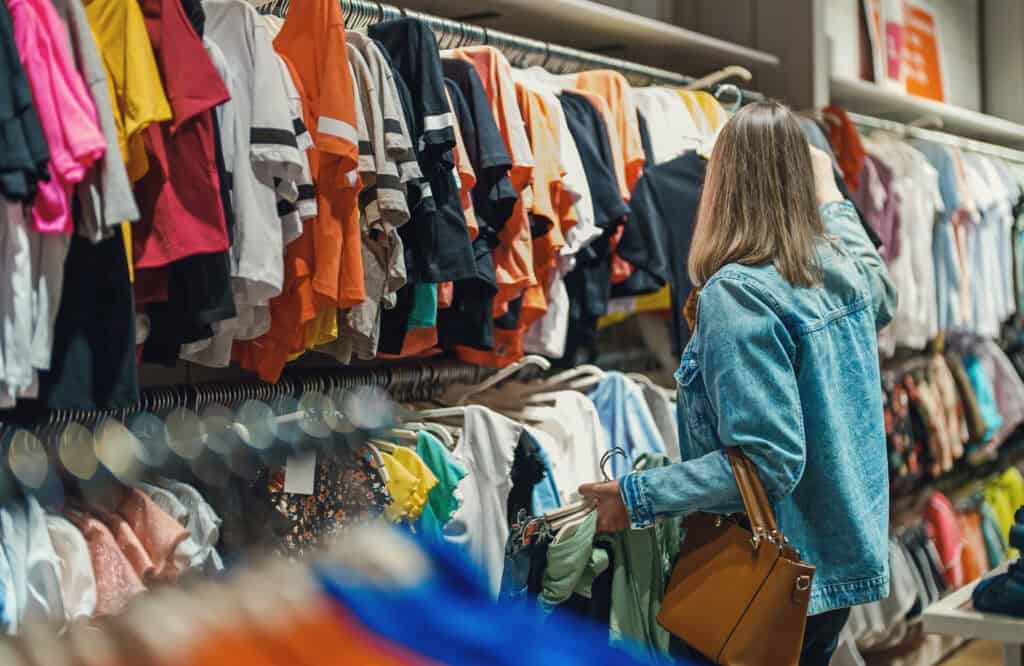
The second-hand market is experiencing an unprecedented surge, driven by changing consumer priorities and increased awareness of environmental issues.
By 2028, the global second-hand apparel market is expected to have grown three times faster than the overall global apparel market. But this trend extends beyond fashion – shoppers are increasingly buying second-hand appliances, refurbished mobile phones and used cars to save money while saving the planet.
While much of this growth has been driven by peer-to-peer platforms like eBay and Vinted, brands are also launching their own takeback schemes and resale platforms to meet the growing demand for second-hand goods.
This route gives brands greater control over the quality and price of their second-hand goods in circulation, which can minimise any negative impacts on reputation. It also allows brands to attract entry-level shoppers who may one day convert to full-price sales.
However, resale does add a layer of complexity to retail operations. Managing both new and pre-loved products will require references to be categorised based on the condition of items, and split orders will be more common as items returned for resale could be spread across the retail network.
An Order Management System (OMS) simplifies these scenarios.
First, the delivery promise displayed on site will dynamically update to reflect the item condition selected by the customer, based on stock location. Multiple delivery times may be displayed in a mixed basket if new and used items need to be shipped separately.
Once the customer places their order, it is automatically allocated to the most suitable stock point based on set business rules. For example, the order will first be offered to locations that can fulfil the entire order. If none are available, the order will then be split and offered to stores that can fulfil the most items in the order, or to stores closest to the delivery address to minimise shipping costs and emissions.
Through integration with a brand’s CRM, the customer is kept informed of their order’s journey – whether they should expect a split order and the expected delivery time of each parcel – ensuring brands can maintain a consistent shopping experience, regardless of whether a customer is shopping new or used.
Recycling
For returned pre-loved products that can’t be resold, retailers will need to effectively manage the recycling of their products, and an OMS can support returns management for items to be recycled.
A Product Information Management (PIM) system is also essential to this process, enabling businesses to track, organise and communicate vital product details, including what materials an item is made from and whether it is renewable or biodegradable.
PIM systems also excel at communicating lifecycle information, which is fundamental to circular practices. Businesses adopting circular business models can rely on PIM to store lifecycle data critical to these operations, such as product usage history and end-of-life information.
PIM systems also play a significant role in consumer education, empowering buyers to make sustainable choices. By presenting clear, detailed information about product materials, environmental impact, and opportunities for recycling or resale, PIM encourages participation in circular practices. Highlighting these opportunities helps brands position themselves as leaders in sustainability while engaging customers who prioritise eco-conscious purchasing decisions.
Rental
Consumers have long-embraced home-sharing (Airbnb) and car-sharing (Zipcar), and as they become more environmentally and financially conscious, the retail industry has increasingly embraced the sharing economy.
Rental is a transformative model for the retail industry. By allowing its assets to be shared amongst a network, retailers can reduce the number of items that are produced to be used only a handful of times. As well as decreasing resource consumption and waste generation, there is huge potential for revenue growth. The global clothing rental market is forecast to be worth £5.53 billion (€6.67 bn | $7.05 bn) by the end of 2025.
Clothing rentals allow consumers to enjoy diverse – and often premium – fashion options at more accessible price points, while simultaneously decreasing the demand for new textile production. Baby and children’s clothing is a niche where renting can be particularly beneficial, as parents need to constantly renew their child’s wardrobe as they grow.
The rental model has the potential to be used across a number of other sectors, including electronics, home appliances and DIY. For example, it is more cost-effective for a consumer to rent an angle grinder from a DIY retailer than it is to buy a new one for occasional use.
By leveraging short-term rental strategies, retailers can address evolving customer needs, reduce the environmental impact of its products – and potentially generate long-term revenue streams.
For example, Atelier Bocage offers a rental subscription service, allowing customers to rent a pair of shoes for €30 per month for a two-month period. At the end of the rental period, the customer can return them for a different pair, or purchase them for half the retail price.
Repairs

Maximising the lifetime of existing products can have a number of environmental benefits, reducing pressure on new materials and keeping items out of landfill.
One way to extend product lifecycles is to offer repairs of damaged or worn-out products, and an OMS and modern point of sale (POS) system offer functionality for creating service and repair orders.
The system allows users to select the product and service (e.g. hemming, repair) along with pricing options. It provides full traceability of the order or repair process, enabling users to track the status of their order.
A PIM system also supports retailers with repairs and alterations by making detailed care instructions, repair guides and warranty data accessible and easy to understand – whether it’s included on product labels, through Digital Product Passports in the form of QR codes, or via digital guides.
This can be explained as a digital “paper slip” – similar to the ones you receive when visiting a tailor. This can include information about the product and the type of service being purchased, such as alterations or repairs.
Optimising Inventory for a Sustainable Future
Inventory Management as a Driver for Sustainability
The challenges & consequences of overstocks
$740 billion — The value of unsold goods in the US alone in 2022
Inventory management is a significant challenge for retailers, with inefficient practices leading to both excess stock and stocks-outs.
Overstocking has long been the preferred option to maximise sales opportunities, but it comes with a high environmental cost, including increased resource consumption, carbon emissions and waste.
As new regulations demand that brands take responsibility for the full lifecycle of unsold stock, and businesses strive to meet their emissions targets, balancing stock levels effectively is now critical.
However, a number of factors have made it increasingly difficult for retailers to plan inventory:
- Rapid trend cycles: Driven by social media, the number of microtrends has boomed, and ultra-fast-fashion players have heightened consumer expectations for a constant cycle of new products by shortening speed-to-market times.
- Channel complexity: As consumers increasingly shop across multiple channels, brands are struggling to provide product options across a growing number of touchpoints – especially if they’re not operating a single pool of stock.
- Supply chain disruptions: Global supply chains have faced unprecedented disruptions in recent years, causing shipments to be delayed and extending already long lead times.
- Unpredictable seasonality: While 2024 is expected to be the warmest year on record, the UK experienced its coldest summer in almost a decade. These unseasonal weather patterns caused by climate change make it hard to predict demand and sell through seasonal stock.
Aligning supply & demand with an OMS
An Order Management System (OMS) can help retailers better align supply with demand.
This starts with a single stock pool. By unifying all stock available at every stock location, including warehouses, stores, drop-shippers and suppliers, and making it available through any sales channel, an OMS improves every item’s potential to sell.
The last-mile supply chain created by local fulfilment centres could lower last-mile emissions between 17–26% through 2025 —Accenture24
The OMS then uses intelligent order orchestration to select the best stock point to fulfil an order. Orchestration rules can be set to send orders to stock locations where products aren’t selling, rather than taking them from locations where they are already likely to sell well.
With complete visibility of stock performance, products can also be redistributed to locations where they are more likely to sell at full-price, rather than waiting for sales to sell through stock.
Petit Bateau is a French childrenswear brand with sustainability built into their DNA. Utilising the business intelligence and order orchestration tools in OneStock OMS, the brand is able to sell through more fragmented stock across its retail network at full price, reducing residual stock by more than 20% at the end of each season.
This will minimise the number of items left at the end of the season – and the need for discounting. By doing so, retailers can also encourage customers to shop more consciously. A full-price purchase is always more considered than a discounted one, and thus means products are likely to have a longer lifetime.
All of the data held by an OMS, item by item and stock point by stock point, can then be utilised by a brand to automate future stock planning and sales forecasting, ensuring the right number of products are produced to meet demand and stock is allocated to the channels where it will sell best. This has reduced costs and enabled greener delivery and return methods, including Buy Online, Pick Up In-Store (BOPIS), pick up from a parcel drop point, home delivery on foot or by bike, and Buy Online, Return In-Store (BORIS).
Sustainable denim brand Nudie Jeans integrated its retail systems and ecommerce store with the Sitoo POS to use its Repair Stores as fulfilment centres. By enabling flexible fulfilment options such as Ship from Store, BOPIS and BORIS, customers could enjoy a seamless shopping journey while reducing the carbon footprint of their orders.
Sustainable Fulfilment Practices
This new supply chain has provided the retail industry with a clear path to greener fulfilment, with more brands integrating their OMS with Point of Sale (POS) systems to enable store fulfilment. This integrated approach allows retailers to utilise stock available in stores to fulfil online orders, boosting stock flexibility and enabling faster, more efficient order processing. At the other end of the journey, returns have also become a major sustainability concern for retail. In 2020, the process of shipping returned items generated 16 million metric tonnes of CO2 emissions in the US alone.25 With in-store fulfilment enabled, retailers can help to reduce this startling statistic by offering in-store returns for online orders.
The OMS then uses order orchestration to select the best location to fulfil an order. The orchestration engine can be configured to allocate orders to the store that is closest to the delivery address and has all items in stock to avoid split orders and stock movements that would increase costs and emissions. Then, the carrier with the lowest emissions can be selected to deliver the order.
Meeting customer demands for fulfilment
60% of consumers consider delivery options when choosing where to shop online —Deloitte26
By displaying the carbon emissions for different delivery options at checkout, retailers can enable shoppers to compare the impact of Buy Online, Pick Up In-Store (BOPIS) versus standard delivery, next-day delivery, same-day delivery, eco-delivery and delivery to a pick-up point – and make more informed choices. To do this accurately requires sophisticated OMS technology, which intelligently calculates the emissions of a specific order based on stock location, delivery address, carrier availability, and so on.
As consumers continue to demand speed and convenience, reducing the environmental impact of order fulfilment will require a fundamental shift in the way they view delivery. Over 161 billion parcels were shipped worldwide in 2022, and this volume is expected to reach 217 billion in 2025.27 The environmental costs of fulfilment are simply untenable, but it can only change if retailers make their customers aware of the impact of their delivery choices. While consumers will still choose fast delivery for certain purchases, many will opt for slower fulfilment if they can see the difference it will make to their carbon footprint. And a significant portion of consumers are already willing to adopt more sustainable fulfilment methods – 54% say they would accept a longer delivery time if it was environmentally friendly.28
Driving Responsible Consumer Engagement
Shaping Consumer Behaviour Through Data and Personalisation
To encourage consumers to shop more sustainably, retailers can shape their in-store and online experiences to highlight eco-friendly products and collections.
For ecommerce search and browsing experiences, this starts at the product level with detailed product descriptions, tagging products with sustainability-related attributes (e.g. organic, carbon-neutral, recycled, pre-loved), and prioritising these products within the search experience through product recommendations.
Using the Bloomreach Engagement platform, the cycling apparel company Isadore created a weblayer that informed customers when they had two of the same item (in different sizes) in their basket, offering them sizing help to find the right fit. This resulted in over 69% of customers removing one of the products from their cart and a 29% decrease in potential returns.
These same tools also enable store associates to deliver more meaningful in-person experiences. With enhanced product information and tailored recommendations available in the POS, they have the insights needed to guide consumers toward more informed and conscious choices. With instant access to detailed product data – such as materials, origin, environmental impact, and sustainability certifications – associates can confidently answer questions and help customers select products that align with their values.
82% of consumers would find it helpful for AI to reduce their time spent researching what to buy. —Google29
While consumer willingness to pay a premium for sustainable products is still unclear, data-driven personalisation still has the power to nudge consumers toward greener choices. In the US, consumers aged over 50 are 18% less likely to buy brands with sustainability credentials than the average shopper. To encourage more eco-friendly choices among this group, retailers can instead emphasise quality over sustainability attributes in personalised recommendations, marketing and content.
Transparency & Trust in the Consumer Journey

For those shoppers seeking more sustainable products, transparency around sourcing, materials and certifications has become increasingly important. Customers want to know if the products they’re buying are made from renewable, recycled, or ethically sourced materials; highlighting that a garment is crafted from organic cotton or recycled polyester gives customers confidence in their choices.
These certifications can be displayed on product pages, packaging and marketing materials to build consumer trust and ensure compliance with regulatory requirements or eco-labelling standards. Clear, visible certifications make it easier for customers to trust a product’s claims, and they also help retailers steer clear of accusations of greenwashing.
It’s worth noting that sustainability standards and certifications can change often, and consumer priorities evolve. Businesses need to regularly review and update their product data to ensure it stays accurate and relevant across all touchpoints.
A Product Information Management (PIM) system serves as a central hub for this data, making it easier to track product details across the supply chain, ensuring suppliers meet high ethical and environmental standards, and accurately communicating this to customers. With a solid PIM system and a commitment to openness, retailers can not only meet the growing demand for transparency but also build lasting trust with their customers, while simplifying the complexity of sustainable product compliance.
Businesses can store and manage crucial regulatory information and certifications – like Fairtrade, FSC (Forest Stewardship Council) or GOTS (Global Organic Textile Standard) – ensuring that sustainability claims are verifiable.
Reducing Waste and Returns Through Digital and Operational Strategies
17% of all retail sales in 2024 are expected to be returned —NRF31
It’s no secret that returns have a huge cost for the planet. Around 17 billion items are returned every year, generating 4.7 million metric tonnes of CO2 emissions and 2.3 million tonnes of waste.33
In the past, customer returns have been considered an unavoidable cost of doing business, but a number of new digital technologies are helping shoppers make more suitable purchasing decisions – and reducing the likelihood of returns.
Confidence in consistent product data
In a world where customers shop across multiple channels, from online to in-store to mobile apps and more, consistency in product information ensures a seamless shopping experience. When product details like size, material or features are presented clearly, customers feel confident in their purchasing decisions, which reduces hesitation and the likelihood of returns.
The problem is, maintaining consistency and clarity across channels is particularly challenging due to the sheer complexity of modern retail. Operating across multiple platforms means curating product data that fits each channel’s specific requirements. An online marketplace might have character limits for descriptions, while a brand’s own website may allow for more detailed information.
Additionally, product data often comes from various sources, such as suppliers, internal teams and legacy systems, and this can lead to discrepancies or outdated information. Ensuring data is accurate, up-to-date and formatted correctly across every channel can quickly become overwhelming, especially for businesses with extensive product catalogues or global operations.
To address these challenges, businesses need a structured approach to managing product information. A Product Information Management (PIM) solution allows businesses to consolidate product data from multiple sources into one centralised platform, creating a single source of truth and ensuring that all product details are accurate, consistent and readily accessible for all channels.
When updates are needed, businesses can make changes in the PIM, which are then automatically reflected across all connected channels, saving time and reducing the risk of errors.
Finally, collaboration is key to ensuring accuracy. Businesses should establish clear workflows and involve stakeholders across departments, such as marketing, product development and compliance, to verify and approve product information before it’s published. Regular audits of product data can also help catch and correct inconsistencies over time.
With return-prone behaviours identified, marketers can create customer journeys that address returns before they happen and dissuade shoppers from returning products. For instance, it’s not uncommon for customers to buy the same item in two different sizes and return the one that doesn’t fit. Businesses can target this behaviour with personalised weblayers on specific pages as users shop on their sites. These pop-up banners can address the root cause of these returns – for example, by linking to a sizing guide or customer service representative to help the customer find the right size.
In-depth engagement with enhanced visuals
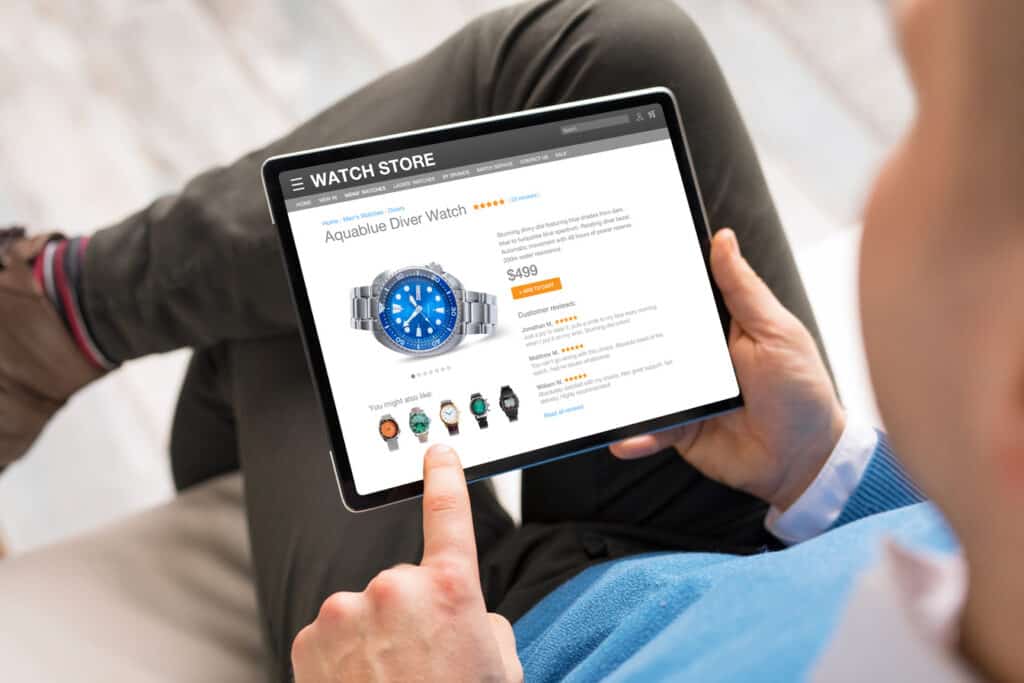
A recent Cloudinary survey found that 30% of consumers have returned an item they purchased online because it looked different from the picture. Fortunately, the same survey identified one approach to fixing the issue: effective use of enhanced media.
User-generated image and video content, along with interactive innovations like 3D models, automated 360-degree spin assets, and augmented reality applications, can help to lessen returns. This type of content is more visually appealing and immersive, and encourages shoppers to engage with products through the ability to zoom, inspect small details and view the products from all angles. The survey found that these features motivated more than half of the respondents to buy a product and reduced the rate of returns.
Reducing packaging waste
Using advanced order orchestration, an Order Management System can allocate orders to stock locations that can ship the entire order to reduce packaging waste and carbon emissions. However, when this is not possible, iterative orchestration rules can be configured to control how split orders are handled and minimise the number of parcels that will be shipped to the customer, and the distance they travel.
Retailers are responsible for 40% of global plastic usage —World Retail Congress35
Customers can also be given the option at checkout between fast or environmentally-friendly deliveries – they can choose to get items delivered separately but quicker by splitting shipments, or to wait for all items in an order to be delivered together. Carbon emissions and packaging consumption can be displayed alongside each option to help them make an informed decision.
Though packaging is designed to protect goods and deliver a branded experience, plastic waste has reached alarming proportions and become a real pain point for conscious consumers.
Innovative packaging solutions
As one of the biggest contributors to global plastic waste, retailers must now adopt innovative solutions that balance customer experience with care for the planet. Many retailers have already taken action to reduce waste throughout the supply chain with eco-friendly packaging materials and recycling initiatives, and the option for customers to opt-out of packaging when shopping in-store or online:
- Eco-friendly packaging: Retailers are increasingly opting for innovative, sustainable packaging materials that are recyclable, biodegradable or compostable.
- Minimal packaging: Retailers have long encouraged in-store customers to bring their own bags. Now, shoppers have the option to receive their online orders with ‘no frills’ packaging, or to opt out of unnecessary extras like gift boxes.
- Circular packaging: Retailers like Lush have embraced reusable packaging systems, where consumers pay a deposit for durable, reusable containers and return them after use. These containers are cleaned, refilled and sent back to the consumer, creating a closed-loop system.
The Role of Technology in Monitoring and Reporting on Sustainability
Data-Driven Reporting for Sustainable Compliance

The ability to report on sustainability efforts is no longer optional for retailers. Regulators, investors and customers demand clear, credible data that demonstrates adherence to international sustainability standards.
From ethical sourcing and end-of-life management to reducing greenhouse gas emissions, retailers will need to collect and analyse vast amounts of data – not only within their own operations (Scope 1 & 2) but throughout the value chain (Scope 3).
The scale of this reporting could be time-consuming and error-prone. Fortunately, modern technology platforms have simplified the complex task of sustainability reporting by centralising data collection and analysis:
- Integrated systems: By integrating all of the systems within your retail tech stack – including ERP, OMS, PIM, POS and CRM – retailers can centralise product information, track inventory levels, and monitor activities across retail functions and throughout the supply chain. This data can be used to generate comprehensive sustainability reports that meet the specific requirements of various international standards.
- Real-time analytics: Advanced analytics tools can provide real-time insights into key sustainability metrics, such as energy consumption, waste generation and carbon emissions. Within inputs from across the value chain, retailers can identify areas for improvement, model new scenarios, and take immediate action to reduce their environmental impact.
Monitoring Carbon Footprint and Resource Efficiency
You can’t manage what you don’t measure.
To achieve their sustainability targets, retailers must have a clear understanding of their resource consumption and carbon footprint at every stage of the value chain. Technology can help track and analyse these metrics, from sourcing to end-of-life.
End-to-end supply chain enhancements
The detailed product data in PIM systems can provide visibility into the supply chain that allows retailers to measure their progress on sustainability and circularity. By analysing this product data, businesses can identify opportunities for improvement, such as shifting production to low-emission factories, substituting materials with more sustainable alternatives, or enhancing recycling processes.
Predictive analytics and machine learning algorithms within an OMS allow retailers to identify and automatically refine high-carbon and resource-intensive processes, taking action to improve inventory management, optimise transportation routes and reduce unnecessary packaging.
Additionally, customer data platforms can aggregate customer behaviour insights to analyse how consumer preferences are shifting toward lower-emission product and delivery options – and where retailers need to do more to encourage conscious consumption through personalisation.
POS systems can help monitor in-store energy consumption and implement measures like smart lighting or HVAC systems. This can help retailers reduce both their energy costs and environmental impact.
Optimising digital footprints for energy efficiency
Sustainability is a complex puzzle, and a piece often overlooked when monitoring greenhouse gas emissions is a brand’s website.
Measuring the carbon footprint of a website is possible using tools like the Image Carbon site (imagecarbon.com). Built by Colby Fayock, a Senior Engineer at Spotify who previously managed DevX at Cloudinary, the app enables anyone to calculate the emissions of a web page (or pages).
When a website’s carbon footprint is high, the likely culprits are bandwidth-hungry images and videos. The good news is that this problem is easy to fix. New tools powered by AI can automatically determine the optimal file size and quality of an image or video, then convert it to a newer, lighter format or codec that best matches the user’s device.
Using Cloudinary’s AI technology, one top international sports apparel brand was able to reduce its bandwidth consumption by 40%, from 6.8TB/day to 4.05 TB/day. On an annualised basis, the company saved 618TB of bandwidth, which is equivalent to saving 1,890 tons of CO2. While those savings are higher than the average, a typical Cloudinary customer still saves an average of 5.8 tons of CO2 each month – equivalent to roughly 5 long haul flights per passenger, or approximately 35–60 flight hours.
Case Study:
Petit Bateau: Sustainability is in Their DNA
From the first thread to the end product, French childrenswear brand Petit Bateau is committed to creating quality clothing that can be passed from generation to generation.
With 130 years of history, Petit Bateau knows a thing or two about durability.
When designing their collections, their focus is on comfortable, high-quality fabrics – mostly cotton, linen and knits – that are easy to care for and can endure a free and active childhood that flourishes in nature.
This is why Petit Bateau is devoted to protecting our children’s best playground.
Second-hand resale
As early as 2017, Petit Bateau recognised the need to extend the life of their products, first launching a second-hand resale app for private sellers.
Today, second-hand products are available to purchase directly from the brand through the ‘Changer DeMain’ scheme in their app, with dedicated space in selected stores, as well as their first 100% second-hand store with more than 25,000 pre-loved items. To encourage clothing recycling, Petit Bateau offers to take back clothes in store, whatever their condition.
- For resaleable items: Customers are offered a voucher redeemable on all products – new and used, online and in stores. The returned items then go through a registration and quality control process before being sorted according to their condition and transferred to a resale location to be cleaned, steamed and put on sale.
- For the customer: The service removes the hassle of peer-to-peer selling – with no photography, packing, shipping or payments required.
- For Petit Bateau: The quality and authenticity of products can be assured, and they can be sold with the same level of service and attention as any new item.
- For non-saleable items: Items that are not in good enough condition for resale are sent to their warehouse where they are either:
- Downcycled alongside textile waste from their Troyes factory and used to insulate buildings or stuff car seats – 88 tonnes of textiles were repurposed this way in 2020.
- Recycled to create ‘new’ Petit Bateau clothes. This involves stripping down, respooling and reknitting items with the aim to achieve the same high quality and to “close the circle.”
End-to-end supply chain enhancements
Like many retailers, Petit Bateau had previously served its ecommerce customers from centralised stock in its Troyen warehouse, offering home delivery, Click and Collect from a store, or pick-up from a relay point.
Despite continuous stock optimisation and the introduction of new delivery options, the brand’s model needed to be reviewed to meet growing customer demand for flexible fulfilment, the need to optimise stock flows, and the desire to control carbon emissions.
Petit Bateau turned to OneStock’s advanced Order Management System (OMS) to unify warehouse and store inventory into a single stock pool, and enable omnichannel fulfilment. Using intelligent order orchestration, the OMS allocates orders to the best stock point to meet the delivery promise – whether that is the Troyen warehouse or any of Petit Bateau’s stores across Europe. This enabled online orders to be shipped from a store close to the customer to reduce costs and emission, and made it possible for customers to Click and Collect their orders within 2 hours if the products were already available in their chosen store.
With the integration of OneStock’s Business Intelligence (BI) Suite, Petit Bateau have further optimised order management to reduce costly and carbon-intensive split orders, and to sell through more fragmented stock across its retail network at full price, reducing residual stock by more than 20% at the end of each season.
Circular design
Not only has Petit Bateau committed to using 100% eco-friendly materials by 2025, they are making other eco-friendly choices too: in their design decisions, cuts, manufacturing processes and choices of dyes. Petit Bateau clothing is designed to be timeless and can be worn season after season – 67% of their products are wardrobe essentials independent of seasonal fashions. They don’t compromise on quality, with products going through stringent checks at all stages of the manufacturing process. Clothes are tested 19 times to ensure they will hold up over time – the iconic Petit Bateau t-shirts are made to last five lifetimes (i.e. up to 125 washes).
With cotton constituting 90% of the fabric used in their products, Petit Bateau has moved away from conventional cotton-growing, which has a major impact on the environment through water and pesticide use. By 2025, 100% of their cotton will be GOTS-certified organic cotton or recycled cotton.
Finally, Petit Bateau has committed to using synthetic or artificial materials only when natural fabrics can’t provide the same quality or feature, for example, in raincoats and swimwear.
However, 70% of their SS21 swimwear collection contained at least 50% recycled fibres from used fishing nets or discarded plastic bottles – highlighting their continued dedication to the circular economy. The brand goes even further to ensure no stock goes to waste. Any unsold clothing is donated annually to charities like Agence du Don en Nature, Dons Solidaires, Secours Populaire and Tricotez Cœur to be distributed to children who need them.
Conclusion: A Collective Path Toward a Sustainable Retail Future

The urgency of sustainability in retail cannot be overstated. As regulators tighten the screws, consumers demand accountability and the planet edges closer to environmental tipping points, the time for transformative action is now.
The good news is that sustainability is still on the agenda. In their global annual survey of engineering decision makers, the MACH Alliance found that 86% consider sustainability to be moderately or very important when defining their tech stack and future infrastructure.39
To achieve sustainability excellence, retail leaders will need to take a holistic approach that blends best-of-breed technology, operational best practices and collaboration.
At OneStock, we are committed to building a technology ecosystem that empowers retailers with cutting-edge solutions, deep expertise, and an unwavering commitment to driving sustainable change in retail.
Glossary
Carbon budgetThe total allowable amount of carbon dioxide emissions that can be released into the atmosphere over a specific period while ensuring that global temperature rise stays within a designated limit.DecarbonisationThe reduction or elimination of carbon dioxide emissions from a process, such as manufacturing, through low-carbon power sources.Digital Asset Management (DAM)Software solutions designed to store, organise and manage digital assets such as images, videos and other multimedia content.Extended Producer Responsibility (EPR)An environmental policy approach that holds producers responsible for end-of-life consequences of their goods.Green Claims CodeA set of principles that ensures businesses comply with their existing obligations under consumer protection law when making environmental claims.Greenhouse gas emissionsGreenhouse gases (GHG) vented to the earth’s atmosphere as a result of human activity, including carbon dioxide and equivalents that can cause climate change.Last-mile deliveryThe final step in the ecommerce logistics process, where goods are transported from a distribution centre to the end-consumer.Order Management System (OMS)A software solution that helps businesses manage and automate the entire order lifecycle, from order creation to order fulfilment. It acts as the digital conductor that orchestrates and optimises all order-related processes.Scope 3 emissionsIndirect emissions that occur in the value chain, both upstream and downstream, that are not produced by the company or brand itself.SustainabilityWithin a business context, sustainability refers to businesses making decisions in terms of environmental, social, human and corporate governance impact for the long term and relates to how a company’s products and services contribute to sustainable development.Tech stackCollection of technologies and tools used to develop and deploy a software application or system (a website, for example).TraceabilityThe ability to identify and monitor the history, distribution, location and application of materials, parts and finished goods to understand the sustainability practices relating to a product.
References
- Statista, Total retail sales worldwide from 2021 to 2026
- United Nations, The Paris Agreement
- Drapers, How to avoid greenwashing
- State of California, SB 54: Plastic Pollution Prevention and Packaging Producer Responsibility Act
- Euromonitor International, Combating Plastic Pollution in Asia Pacific: The Role of Extended Producer Responsibility (EPR)
- Mintel, UK Online Retailing Market Report 2023
- Fashion United, 61 percent of fashion shoppers prioritise cost over sustainability
- Harvard Business Review, The Resale Revolution
- Zurich, Shoppers want brands to help them be greener
- BCG & World Retail Congress, Sustainability in Retail Is Possible But There’s Work to Be Done
- McKinsey & Company, The State of Fashion 2025
- BCG & World Retail Congress, Sustainability in Retail Is Possible But There’s Work to Be Done
- The Shift Project, Lean ICT: Towards digital sobriety
- Deloitte, Get Out In Front Global Research Report
- NRF, The Carbon Footprint of Retail Products
- Circle Economy, The Circularity Gap Report 2023
- Circle Economy, The Circularity Gap Report 2023
- Circle Economy, The Circularity Gap Report 2021
- ThredUp, Resale Report 2024
- Statista, Revenue of the rental apparel market worldwide from 2019 to 2026
- McKinsey & Company, Thinking beyond markdowns to tackle retail’s inventory glut
- Carbon Brief, State of the climate: 2024 now very likely to be warmest year on record
- Met Office, UK experiences coolest summer since 2015
- Accenture, The sustainable last mile
- Google, How to clean up the messy business of e-commerce returns
- iWeb, The Benefits of Offering Flexible Delivery Options in Foodservice E-commerce
- Statista, Global parcel shipping volume between 2013 and 2027
- Descartes, Retailers: Sustainability is Not a Challenge, It’s an Opportunity
- Google & Wired Consulting, Upgrading how we buy
- McKinsey & BoF Insights, The State of Fashion 2025
- NRF & Happy Returns, 2024 Consumer Returns in the Retail Industry
- Forbes, There Is No Such Thing As A Free Return
- BBC Earth, Your brand new returns end up in landfill
- Cloudinary, Reducing Holiday Returns
- BCG & World Retail Congress, Sustainability in Retail Is Possible But There’s Work to Be Done
- Petit Bateau, Creating a circular economy
- BRC & OneStock, How can retailers participate in the Circular Economy?
- Petit Bateau, Creating a circular economy
- MACH Alliance, Annual Survey of Global IT Decision Makers 2024